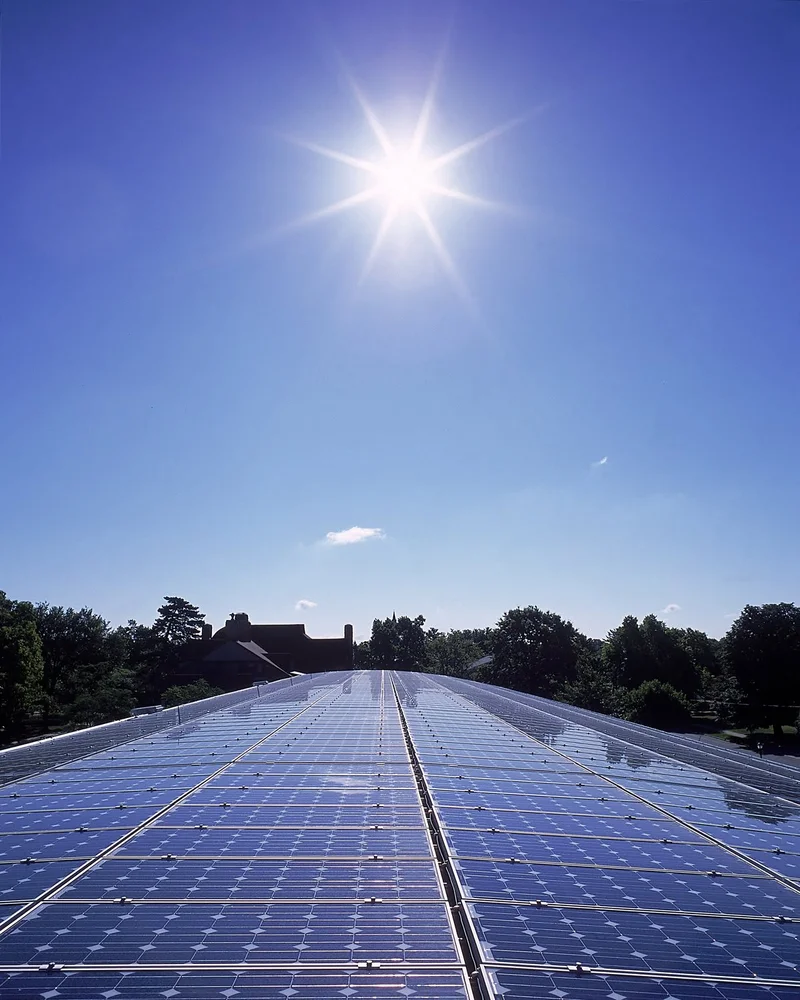
Australia's about to roll out a nationwide "solar sharer" program. The headline? Three hours a day of "free" solar power for households in New South Wales, south-east Queensland, and South Australia starting next July, with potential expansion in 2027. Climate Change and Energy Minister Chris Bowen is pitching it as a win-win: good for the planet, good for your pocket. But let's dig into the numbers, shall we?
The core idea isn't terrible. Australia's got a glut of solar during the day, thanks to over 4 million rooftop installations. The government hopes to shift demand from peak evening hours to the sunnier midday, minimizing price spikes and grid instability. They'll do this by tweaking the "default market offer" – basically, setting a maximum price retailers can charge.
Bowen claims that anyone who shifts their electricity use to this zero-cost period will benefit, regardless of solar panel ownership or rental status. And the more people participate, the better the system-wide cost reduction. Sounds idyllic, right? But here's where the data gets interesting.
The program hinges on smart meters. And while "the majority of homes" have them, that's not all homes. What about low-income households in older buildings? Or renters in apartments? Are they being left out of the equation? Details on how these groups will access the "free" solar remain scarce. The distribution of benefits might be far from even.
I've looked at dozens of similar programs, and the success rate is always tied to equitable access.
The Australian Energy Council, representing generators and retailers, isn't thrilled. Their chief executive, Louisa Kinnear, is "disappointed" by the lack of consultation, fearing it could damage industry confidence and stifle innovation. She worries businesses might "exit a market."
Now, you might dismiss this as typical industry whining. But there's a valid point buried in there. If the government mandates a free solar period, what incentive do retailers have to develop better, more tailored solar plans? The risk is that this well-intentioned intervention flattens the market, reducing competition and ultimately hurting consumers.
Some retailers, like AGL and Red Energy, already offer free solar periods. Are these existing programs superior? The government's plan risks undermining these private sector initiatives.
The success of this hinges on whether people actually change their behavior. Can you realistically convince the average household to run their washing machine at noon on a Tuesday? Or charge their EV in the middle of the day instead of overnight?
The government says Australians can "schedule" appliances. But scheduling requires effort, awareness, and the right technology. (How many people actually use the scheduling feature on their washing machines?) If only a small percentage of households adapt, the impact on peak demand – and electricity prices – will be minimal.
This is where the program could easily turn into a PR stunt. It sounds great, but the actual impact on electricity prices might be negligible. The Smart Energy Council calls it "good news for Australian households struggling with the cost of living." But is it meaningful good news, or just a drop in the bucket?
The Albanese government faces criticism over rising electricity prices, which critics (erroneously, according to the article) link to wind and solar. Bowen claims this program proves "what's good for the planet is good for your pocket." But is it really "free"? Someone, somewhere, is paying for it. Whether it's through higher prices outside the free period or through the stifling of innovation, there's a cost. The question is: who bears that cost, and is it distributed fairly?
Ultimately, the Australian solar sharing program is a gamble. It could be a brilliant way to leverage excess solar energy and lower electricity prices. Or it could be a well-intentioned but ultimately ineffective intervention that distorts the market and leaves some households behind. The data, as always, will tell the true story.
This is a classic case of government intervention creating more problems than it solves. The "free" solar is a mirage; it's just shuffling costs around. I'd rather see a focus on market-driven solutions that incentivize innovation and ensure truly equitable access to affordable energy.