XRP's "Death Cross": Is This the End, or Just a Dip?
XRP is currently trading around $2.25 (specifically, $2.2533), a 6% dip in the last 24 hours. That's the headline. The subtext, however, is far more interesting. It's bumping against the lower end of its three-week trading range, somewhere between $2.20 and $2.70. Nothing too alarming there. But the looming "death cross" – where the 50-day SMA dips below the 200-day SMA – is raising eyebrows. XRP Price News: Ripple-Linked Token Approaches 'Death Cross'
The death cross is a widely watched indicator. But, let's be honest, it's not a crystal ball. It suggests weakening short-term momentum relative to the long-term trend. In plain English: the price might go down further. But it's just one data point. And as any seasoned analyst knows, relying on a single indicator is a rookie mistake.
Adding fuel to the fire, the MACD histogram on XRP's daily chart is "teasing a bearish crossover." More technical jargon. What it really means is there might be a renewed negative shift in momentum. Again, might.
The broader market context is also important. Bitcoin’s recent struggles are casting a shadow over everything. XRP isn't operating in a vacuum. It's tied to the overall sentiment around crypto, and right now, that sentiment is jittery.
But here's where things get interesting. Ripple just launched Ripple Prime, a digital asset spot prime brokerage for U.S. institutional clients. (The acquisition cost was substantial (reported at $2.1 billion).) This is a major move, signaling Ripple's ambition to become a one-stop shop for institutional crypto services. Ripple Prime offers OTC spot trading for dozens of digital assets, including XRP and their RLUSD stablecoin. They're not just sitting still while the price fluctuates.
And this is the part of the report that I find genuinely puzzling.
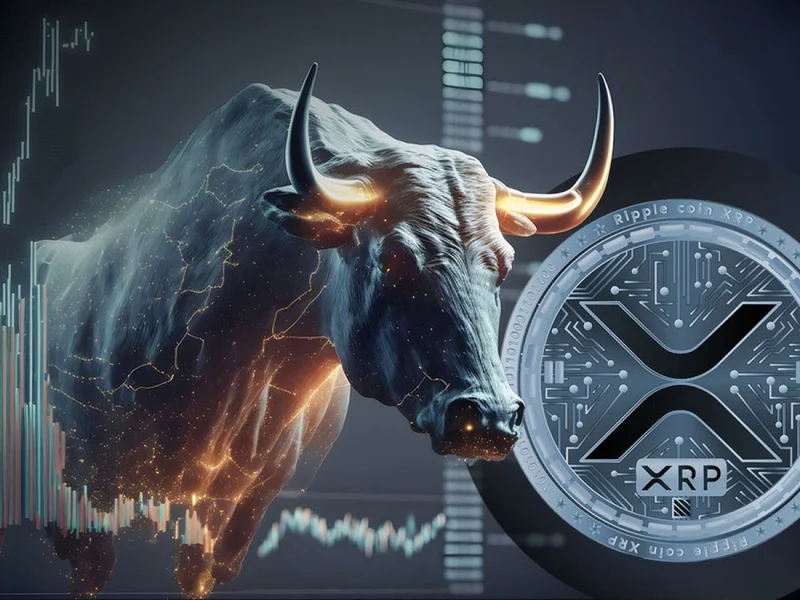
While XRP's price action is currently underwhelming, Ripple is actively building out its infrastructure. They're playing the long game. Ripple Prime complements Ripple Payments (their cross-border transaction platform) and Ripple Custody (their secure storage platform). XRP and RLUSD are integrated across these offerings, aiming to enhance liquidity and streamline settlement.
The analyst over at Seeking Alpha makes a bold claim: Ripple’s $5 trillion network could justify a bigger valuation. That's a big number. Is it realistic? Hard to say. But the underlying premise – that Ripple's utility extends far beyond speculative trading – is valid. They're trying to become the Visa of crypto.
Now, let's talk about volume. XRP climbed 2.75% to $2.34 recently, but underperformed the broader crypto market. Volume fell 6% below the seven-day average, suggesting only mild institutional engagement. The session opened strong, then reversed sharply. Prices fell from $2.51 to $2.35 before a late recovery. This intraday breakdown triggered 420.8 million in volume – roughly 400% above average – confirming firm resistance at $2.44 and defining $2.33 as the emerging support base.
The long-term holders increased daily spending by 580% to $260M, signaling ongoing profit realization despite stable inflows. What does this mean? Some big players are taking profits off the table. Is it a sign of impending doom? Not necessarily. It could just be prudent portfolio management.
Technically, XRP is trading within a consolidation range bounded by $2.30–$2.35 support and $2.60–$2.72 resistance. The $2.54 pivot zone remains decisive for directional bias. Unless XRP can sustain trade above $2.54, technical momentum favors continued consolidation with potential downside toward $2.25–$2.02.
So, what's the takeaway? The "death cross" is a warning sign, not a death sentence. XRP's price is facing headwinds, but Ripple is actively building its business. The key is to look beyond the short-term price fluctuations and focus on the underlying fundamentals. Is Ripple succeeding in its mission to become a major player in the financial services industry? The answer to that question will ultimately determine XRP's long-term fate.